
If you have been researching non-surgical ways to shift a stubborn roll around the middle, ultrasonic cavitation has almost certainly come up — often as one of the cheapest options on the menu. It promises to break down fat with sound waves, no needles or downtime required. But how much of that promise holds up, what can it realistically achieve, and how do you tell a clinic doing it properly from one selling false hope? Here is an honest, jargon-free guide.
What is ultrasonic cavitation?
Ultrasonic cavitation — also called ultrasound cavitation or ultrasonic lipolysis — is a non-invasive body-contouring treatment that uses low-frequency ultrasound waves to break down fat cells beneath the skin. A handheld device is moved slowly over the treatment area, and the sound waves do the work while the surface of the skin is left untouched. Because the equipment is comparatively inexpensive and no anaesthetic is needed, it has become one of the most widely available and affordable fat-reduction treatments in UK clinics and salons.
Like all body-contouring treatments, it is important to be clear about what it is not. Cavitation is not a weight-loss treatment. It targets discrete, pinchable pockets of subcutaneous fat — the kind that lingers despite sensible eating and exercise — rather than lowering your overall body weight.
How ultrasonic cavitation works
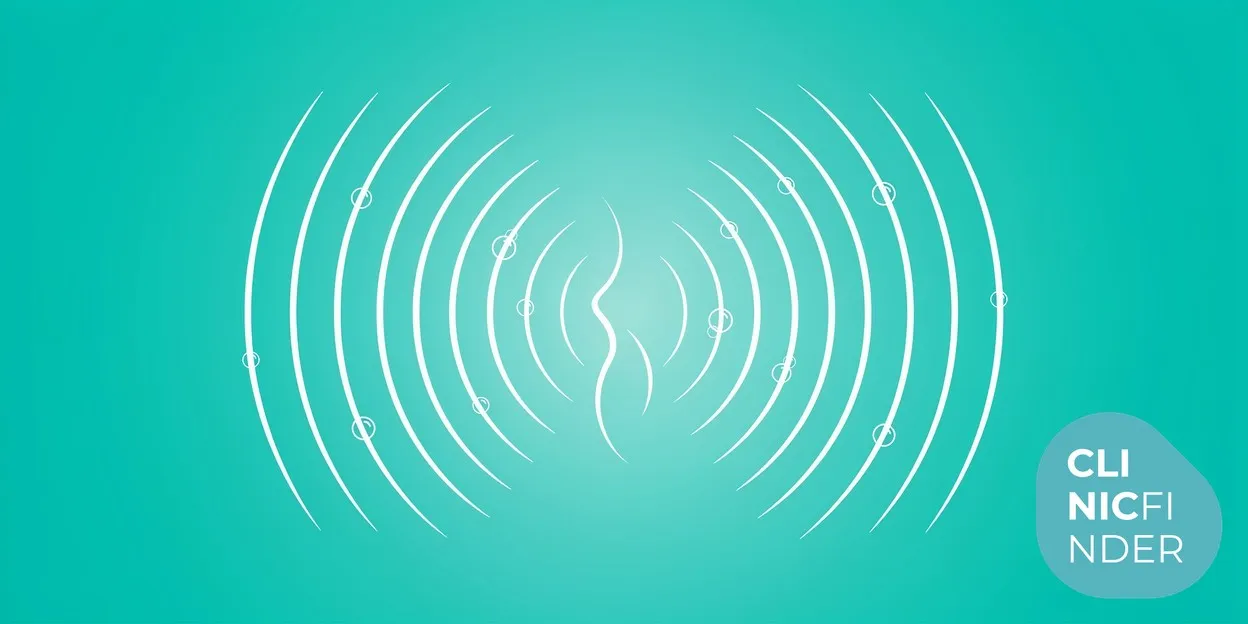
The mechanism is a genuinely different approach from freezing or heating fat. It works through mechanical disruption:
- A handheld transducer emits ultrasound waves at low frequencies (typically 35–40 kHz), which pass through the skin and reach the subcutaneous fat layer.
- These pressure waves create alternating cycles of compression and expansion, forming tiny microbubbles at the interface between water and fat inside and around the fat cells.
- The microbubbles rapidly grow and then collapse — a process called inertial cavitation — generating intense, highly localised pressure that ruptures the fat-cell membrane, without heat, freezing or programmed cell death.
- The contents of the cell, mainly triglycerides and fatty acids, are released into the surrounding fluid.
- Water-soluble glycerol is absorbed and used by the body as energy, while the insoluble fatty acids are carried to the liver, processed, and cleared through the lymphatic system and urine over the following days.
Cavitation does not melt or freeze fat. It uses collapsing microbubbles to physically rupture the fat-cell membrane, then relies on your body to clear the contents over the following days — which is why hydration and aftercare genuinely matter.
This is a different route from the two other common non-surgical options: cryolipolysis destroys fat cells by freezing them into programmed cell death, while HIFU uses focused heat to coagulate them. If you are weighing these up, our guide to fat freezing (cryolipolysis) explains the cold-based approach in detail.
Cavitation vs HIFU: a quick comparison
Ultrasonic cavitation and HIFU are frequently confused because both use “ultrasound”, but they are very different treatments doing different jobs.
| Feature | Ultrasonic cavitation | HIFU body |
|---|---|---|
| Frequency | Low (35–40 kHz) | High, focused (MHz range) |
| Main mechanism | Mechanical membrane rupture | Thermal coagulative necrosis |
| Treatment depth | Superficial subcutaneous fat | Deeper subcutaneous fat |
| Skin tightening | Minimal, unless combined with RF | Yes — stimulates collagen |
| Typical cost | More affordable (from ~£60/session) | Higher (from ~£150/session) |
| Sessions needed | 6–12 for optimal results | 1–3 for optimal results |
| Best suited to | Larger areas, generalised inch loss | Localised pockets, skin tightening |
In short, cavitation is the lower-cost, gentler option best suited to covering larger areas over a course of sessions, whereas HIFU body contouring works deeper and adds a tightening effect. Neither is inherently “better” — they suit different concerns.
What results can you realistically expect?
This is where honest expectations matter most, because cavitation is often over-sold. The evidence base is more modest than for cryolipolysis, but it is not nothing: a histological study confirmed that cavitation reduces the size of fat cells and causes triglyceride to leak out, without appreciable damage to blood vessels, connective tissue or the skin. Clinical studies have reported reductions in abdominal circumference of up to around 6.86 cm across a full course.
A few realistic truths to hold on to:
- It is measured in inches, not pounds. Some people see roughly 1–5 cm of circumference reduction after a single session, but the scales usually do not move.
- It is a course, not a one-off. Visible contouring tends to appear after around 6 sessions, with optimal results — in the region of a 20–30% reduction of fat in the treated area — after about 8 sessions.
- Results are gradual. Changes begin to show roughly 48–72 hours after each session, and the full result of a course builds over about 6–12 weeks.
- It is long-lasting, not a shortcut. Ruptured fat cells do not regenerate, but the cells that remain can expand with weight gain, so a stable weight is what preserves your result.
How many sessions, and what does it cost in the UK?
Most clinics recommend a course of 6 to 12 sessions, spaced around 5 to 7 days apart to give the body time to clear the released fat between treatments. Single sessions are not recommended as a standalone treatment because the visible change is limited. Its relatively low price is a big part of the appeal. As a rough 2025 guide:
| Format | Typical UK price range |
|---|---|
| Single session (20–30 min) | £60–£89 |
| Single session (40–60 min) | £85–£120 |
| Course of 6 sessions | £320–£510 |
| Course of 8 sessions | £490–£840 |
| Combined cavitation + radiofrequency (course of 8) | £875–£1,225 |
Combining cavitation with radiofrequency skin tightening or shockwave therapy costs more but can improve the overall outcome, particularly where mild skin laxity or cellulite is a concern.
Which areas can it treat, and who is it for?
Cavitation is best suited to larger surface areas where fat tends to accumulate, rather than small isolated pockets:
- Abdomen and stomach
- Flanks and love handles
- Thighs — front, inner and outer
- Buttocks and back fat
- Upper arms
- Cellulite-affected areas, especially when paired with shockwave therapy
It is less effective for very small, defined pockets, where a treatment such as fat-dissolving injections or fat freezing may be a better fit. Good candidates are adults who are already close to a healthy, stable weight and want to reduce inches across a broader area with a budget-friendly, no-downtime option — not people looking to lose a significant amount of weight.
Just as importantly, cavitation is not suitable for everyone. It is avoided in pregnancy and breastfeeding, and where there is a pacemaker or metallic implant in the treatment area, liver or kidney disease (which impairs the body’s clearance of released fat), a bleeding or clotting disorder, epilepsy, or active skin infection or open wounds in the area. It is a relative contraindication in Type 1 diabetes. A proper consultation and honest medical history are the only way to confirm it is safe for you.
Aftercare, downtime and getting the best result
One of cavitation’s genuine advantages is that there is essentially no downtime. You can return to normal activities straight away. Mild redness, warmth or slight swelling may occur for 24 to 48 hours and settles on its own.
Because the result depends on your body clearing the released fat, aftercare is not optional window-dressing — it is part of the treatment. Clinics typically advise drinking plenty of water, avoiding alcohol for around 48 hours, and skipping strenuous exercise for 24 hours, all to support lymphatic clearance. Keeping a stable, healthy weight, staying active and eating sensibly across the weeks of a course will do far more for your final result than any single session.
Making an informed choice
Ultrasonic cavitation is a low-cost, low-commitment way to nudge stubborn, pinchable fat over larger areas — provided you go in with realistic expectations. It is a finishing touch that rewards patience and a healthy lifestyle, not a magic wand, and its results are gentler and less well-evidenced than some pricier alternatives. Because the equipment is cheap and widely sold, quality varies enormously between providers, so who performs it matters as much as the technology itself.
Above all, choose your clinic carefully. Use Clinic Finder to compare accredited clinics near you, check your practitioner’s training and credentials, and ask directly about the device they use, how many sessions they honestly expect you to need, and what results are realistic for your body. Our guide to choosing an aesthetic clinic walks you through exactly what to ask before you book.
