Local injection lipolysis — and how it differs from GLP-1 medicines
These injections should not share one verdict: prescription deoxycholic acid has trials for fat beneath the chin, Aqualyx has smaller product-specific studies, comparable Lemon Bottle trials are lacking, and GLP-1 medicines treat weight systemically rather than dissolving one chosen fat pocket.
Evidence reviewed •UK-focused•No clinic controls this guide
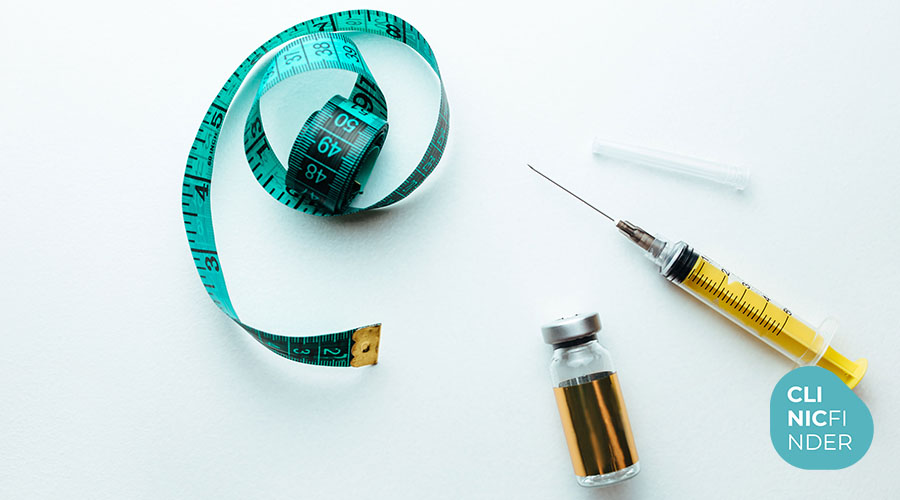
A syringe does not identify the treatment: local fat-dissolving products and prescription weight-management medicines are not interchangeable.
Local injections
Target one fat pocket
GLP-1 medicines
Act systemically on appetite
Aqualyx
Deoxycholate formulationNot the same formulation as ATX-101
Lemon Bottle
Separate branded product
Key question
What exactly is being injected?
Key distinction
Spot reduction is not weight management
Start here
What it is — without the sales pitch
Local injection lipolysis places a substance directly into subcutaneous fat with the aim of damaging fat cells in that small area. Published Aqualyx studies describe it as a sodium-deoxycholate/deoxycholic-acid-salt formulation. The best randomised evidence, however, concerns ATX-101: a different, defined prescription deoxycholic-acid formulation studied beneath the chin.
Lemon Bottle is another branded product, not a synonym for deoxycholic acid or Aqualyx. We did not identify comparable high-quality, product-specific clinical trials in this evidence search. A 2025 FDA warning letter concerned a US distributor selling LemonBottle Ampoule Solution as an unapproved drug; that is US regulatory action, not proof of the product’s UK legal status.
GLP-1 and dual GIP/GLP-1 medicines such as semaglutide and tirzepatide are different again. They are prescription medicines used for diabetes and, for authorised products and eligible patients, weight management. They alter appetite and metabolism across the body; they do not selectively dissolve fat at an injection site.
Our bottom line
First decide whether the goal is a small local contour change or clinically supported overall weight management. Then assess the exact product on its own evidence. “It is an injection” is not a meaningful category.
What it may help with
Moderate submental fat when an appropriately authorised deoxycholic-acid product is selected and administered by a suitably qualified healthcare professional
A small, well-defined local concern when product-specific evidence and anatomy support injection lipolysis
Overall weight management when an authorised GLP-1 or dual GIP/GLP-1 medicine is clinically appropriate and properly prescribed
What it will not do
Make local fat-dissolving injections a treatment for obesity or visceral fat
Make GLP-1 medicines target a chosen chin, arm, abdomen or thigh
Make unlike products interchangeable
Local injection lipolysis is placed into a selected fat pocket; the product, formulation, treatment area and technique all matter.
Know what is being compared
Four injections with four different evidence stories
Related names and similar delivery methods can hide major differences. These products should not share one set of claims, consent information or expectations.
01
Local deoxycholate formulation
Aqualyx
Injected into a selected subcutaneous fat pocket for local contouring.
What the evidence tells us
A small published study involved 7 women and 14 inner-knee fat pads; other reports include small series and uses outside cosmetic contouring. This is much thinner evidence than the ATX-101 trial programme.
Keep in view
Do not describe Aqualyx simply as “the same as Kybella”. Formulation, product status, body area and technique matter. Published case reports include necrosis, infection and chronic nodules after deoxycholate injections.
02
Studied medicine for submental fat
ATX-101 / prescription deoxycholic acid
A defined formulation studied to reduce moderate or severe fat beneath the chin.
What the evidence tells us
This is the strongest evidence within injection lipolysis, but the trials do not validate Aqualyx, Lemon Bottle or treatment of the abdomen, arms or thighs.
Keep in view
Product authorisation and availability are country-specific. Technique-related risks include nerve injury, ulceration and difficulty swallowing.
03
Separate branded mixture
Lemon Bottle
Marketed for local fat reduction, often with claims of a gentler or “natural” mechanism.
What the evidence tells us
Marketing descriptions are not a substitute for verified composition, manufacturing quality, pharmacology and controlled clinical outcomes.
Keep in view
Ask for sealed packaging, current ingredients, batch and legal status. US FDA action against one distributor is relevant safety context but should not be misreported as a UK ruling.
04
Systemic prescription weight-management medicines
Semaglutide / tirzepatide
Reduce appetite and support overall weight management in eligible people, alongside dietary, activity and clinical support.
What the evidence tells us
These medicines can produce substantial overall weight loss and improve weight-related health for selected patients. They cannot choose where fat is lost and are not injected into the area someone wants to change.
Keep in view
They require a legitimate prescription, medical assessment and follow-up. MHRA strengthened pancreatitis warnings in 2026; pregnancy, contraception, surgery and other health issues need specific advice.
Results & trade-offs
What to realistically expect
01
Choose the goal before the product
A small local bulge and obesity are not the same clinical problem. Local lipolysis and GLP-1 medicines should not be sold as substitutes for one another.
02
Product identity comes first
Ask to see sealed packaging, verified active ingredients, batch details, patient information and source. “Fat dissolver” is not a sufficient answer.
03
The best local evidence is narrow
Randomised trials support a specific ATX-101 formulation for submental fat. Aqualyx evidence is smaller; comparable controlled evidence for Lemon Bottle was not identified.
04
Every route has trade-offs
Local deoxycholate treatment can cause marked swelling and technique-related injury. GLP-1 medicines commonly cause gastrointestinal effects and have systemic contraindications and warnings.
R
Research in context
What research can — and cannot — tell us
A defined prescription deoxycholic-acid formulation has trial evidence beneath the chin. Aqualyx has smaller product-specific studies, Lemon Bottle lacks comparable clinical evidence, and GLP-1 medicines treat weight systemically rather than dissolving a chosen fat pocket.
A 2023 meta-analysis found efficacy for ATX-101-type deoxycholic acid beneath the chin but also more local adverse effects; all five included trials had potential industry sponsorship bias. Aqualyx studies are much smaller, while GLP-1 evidence belongs to a separate obesity-medicine literature and cannot validate local lipolysis.
Safety
Risks should be part of the decision
“Non-surgical” does not mean risk-free. The exact device or product, treatment area, practitioner and your health all change the risk.
01
Common or expected
Local lipolysis: swelling, bruising, redness, pain, numbness, firmness or nodules
GLP-1 medicines: commonly nausea, vomiting, diarrhoea, constipation or abdominal symptoms
No useful response, or a result that does not match the person’s goal
02
Important complications
Local lipolysis: infection, ulceration, tissue death, scarring, nerve injury, vascular injury or damage to nearby structures
GLP-1 medicines: acute pancreatitis, gallbladder problems, dehydration and other product-specific adverse effects
Fake, contaminated or incorrectly dosed products obtained through unregulated sellers
03
Get prompt medical advice
Spreading redness, heat, pus, fever or rapidly increasing pain
Skin that blisters, turns pale/dusky or breaks down
New facial weakness, trouble swallowing, breathing difficulty, severe swelling or severe persistent abdominal pain that may radiate to the back
If you feel seriously unwell or have trouble breathing, seek urgent medical help. This page cannot assess an individual complication.
Suitability
A consultation should sometimes end with “no”
It may be reasonable to explore if…
A clinician has separated a local contour concern from a need for overall weight-management care
The exact product has credible evidence for the proposed aim and area
The practitioner or prescriber has the right competence, accountability and follow-up pathway for that product
Pause and get individual advice if…
An unidentified, decanted or online-bought product, or refusal to show packaging and batch details
Pregnancy, breastfeeding, planned pregnancy, active infection, bleeding problems or relevant medication
A cosmetic injector offering GLP-1 medicine without a proper prescribing, diagnostic and monitoring service
The treatment journey
What good care should look like
01
Choose the correct pathway
Clarify whether the goal is local contouring or treatment of overweight or obesity. Assess the cause, health impact, medicines and alternatives before discussing a brand.
02
Verify the exact product
For local lipolysis, record ingredient, concentration, batch, expiry, supplier and injection map. For GLP-1 treatment, use an authorised product from a registered pharmacy under a legitimate prescription.
03
Product-specific consent
Local injection consent should cover swelling, infection and anatomical injury. GLP-1 consent should cover systemic effects, pregnancy, contraception, surgery, pancreatitis symptoms and the longer-term plan.
04
Measure the right outcome
Assess local contour with standardised images or measurements; assess weight medicines with weight, health, tolerability and agreed clinical goals. Do not swap those endpoints.
GLP-1 and dual GIP/GLP-1 medicines are systemic treatments for eligible patients, not spot-reduction injections.Prescription medicines require assessment, dosing guidance, follow-up and advice about side effects, pregnancy and planned surgery.
Compare your options
The alternative is not always another procedure
No treatment
Avoids injection and product risk; a cosmetic concern does not have to be treated.
Cryolipolysis
Non-injectable local contouring with different risks, including PAH.
Am I trying to change one local fat pocket or manage my overall weight and health?
02
What is the exact product, active ingredient, concentration and batch number?
03
What is its UK legal status, and can I read the official patient information?
04
What evidence supports this product in this exact body area?
05
Are you a regulated healthcare professional, and who is clinically accountable?
06
If this is a GLP-1 medicine, what diagnosis, monitoring, longer-term plan and stopping criteria apply?
07
Who can assess me urgently if I develop infection, skin injury, weakness or severe abdominal pain?
Source library
Research and guidance behind this page
We link to guidance and papers so you can check the evidence yourself. A source appearing here does not mean every claim or conclusion in it is beyond debate.
UK Yellow Card route for suspected side effects, poor quality or counterfeit products.
Common questions
Frequently asked questions
Is “Lemon Bottle” the same as prescription deoxycholic acid?
No. Evidence for a defined deoxycholic-acid medicine cannot be transferred to a differently formulated branded product. Ask for the exact ingredients and product status.
Is Aqualyx the same as Kybella or ATX-101?
No. They are related through deoxycholate/deoxycholic-acid chemistry, but they are different formulations with different product status and evidence. The large randomised submental-fat programme for ATX-101 should not be presented as an Aqualyx trial.
Are Aqualyx or Lemon Bottle alternatives to GLP-1 medicines?
Not in a like-for-like sense. Local lipolysis aims at a small subcutaneous pocket. GLP-1 and dual GIP/GLP-1 medicines act systemically and may be prescribed for weight management in eligible people. They cannot target one chosen area.
Are Ozempic, Wegovy and Mounjaro interchangeable?
No. They contain different medicines or have different authorised uses. In the UK, Wegovy is semaglutide authorised for weight management, while Ozempic is a semaglutide product for type 2 diabetes; Mounjaro contains tirzepatide. A prescriber should choose by indication and individual circumstances.
Are fat-dissolving injections licensed in the UK?
Status is product-specific and can change. Ask the prescriber to identify the exact medicine or product and show its official information. If they cannot, do not proceed.
Why does the body area matter?
Evidence and anatomy differ. A formulation studied under the chin is not automatically proven for the abdomen, arms or thighs, and injection near nerves or vessels carries area-specific risk.
How can I report a suspected reaction in the UK?
Seek medical care first. Suspected problems with medicines or medical devices can also be reported through the MHRA Yellow Card scheme; anyone can report.