What it may help with
- Someone seeking a small change in a localised subcutaneous fat area
- A person who accepts a course of treatment and an uncertain response
- An area and patient profile covered by the exact device instructions

Independent treatment guide
Non-invasive therapeutic ultrasound body contouring
Some small studies report local circumference or skinfold changes after ultrasound body contouring, but “cavitation” covers unlike devices and protocols. Modern independent evidence for the varied salon-style treatments remains sparse, so a marketed centimetre loss should not be treated as a predictable result.
Start here
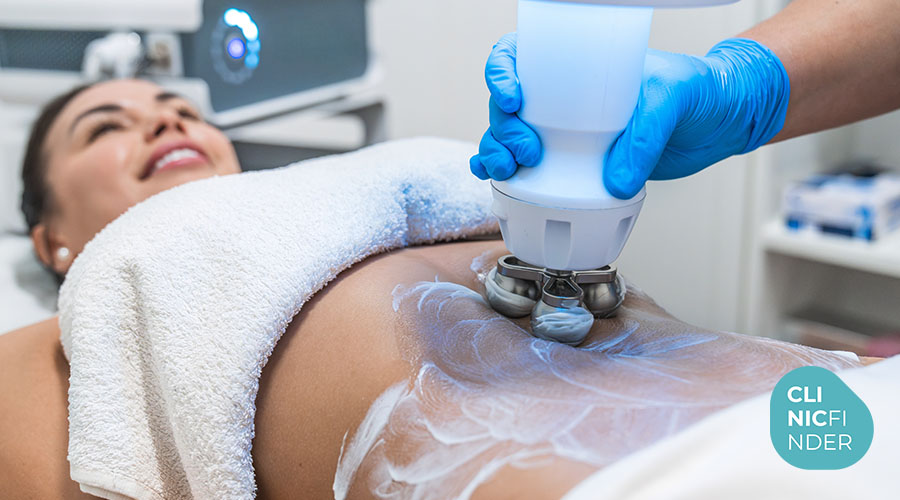
Therapeutic ultrasound sends acoustic energy into tissue. Depending on the device and energy pattern, it may create mechanical or thermal effects intended to disrupt fat cells and reduce a local circumference.
“Ultrasound cavitation” is not a single standardised procedure. Frequency, power, focusing, treatment duration and combined radiofrequency vary. Claims should be supported by evidence for the exact device and protocol, not ultrasound in general.
The treatment may produce a small local change for some people, but evidence is too limited to promise a reliable result. Ask for device-specific trials and consider whether the cost of a course is justified by that uncertainty.
What it may help with
What it will not do
Results & trade-offs
There is no robust, widely applicable percentage reduction. A small 2015 comparative trial found circumference and skinfold changes but no weight or BMI advantage.
Clinics commonly sell packages. Ask for the full cost, stop criteria and how a non-response will be handled before prepaying.
Hydration, tape placement, posture and abdominal contents can change circumference. Repeated measurements should use the same method and timing.
Ask what data support the proposed number of sessions and any ongoing top-ups for the exact machine.
Research in context
Small trials report changes in local circumference or skinfold, but there is limited high-quality, modern, independent evidence for the varied salon-style treatments sold as cavitation.
Published evidence mixes focused, non-focused, thermal, non-thermal and combination devices. A result from one category cannot be safely generalised to another. Treatment-specific long-term and sham-controlled data are limited.
Safety
“Non-surgical” does not mean risk-free. The exact device or product, treatment area, practitioner and your health all change the risk.
If you feel seriously unwell or have trouble breathing, seek urgent medical help. This page cannot assess an individual complication.
Suitability
The treatment journey
Confirm the device model, intended use, contraindications and training. Record weight and standardised measurements without implying the treatment changes health.
Agree the area, number and spacing of sessions, full price and an objective stop rule if the first part of the course produces no change.
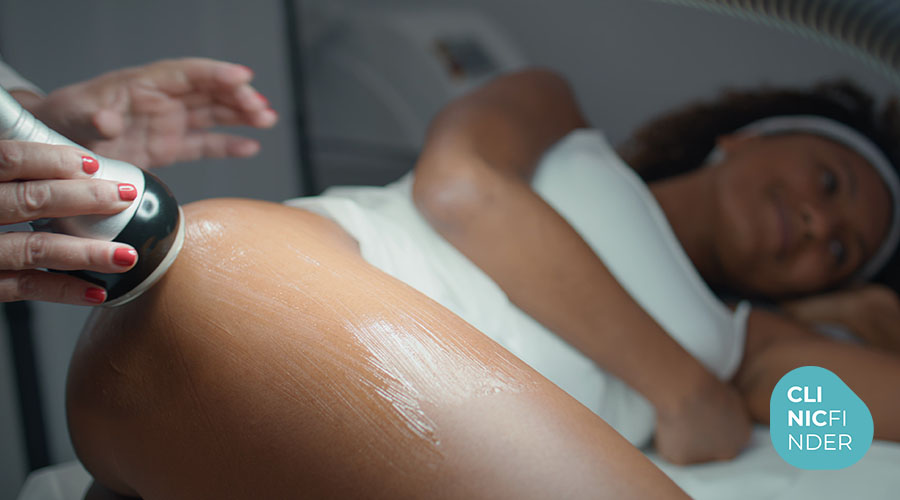
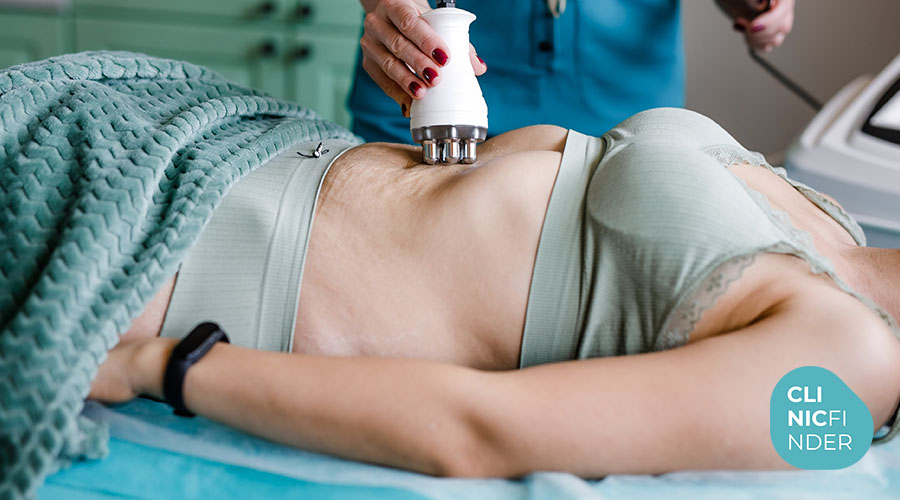
Gel provides contact while the handpiece moves over the marked area. Report sharp pain or excessive heat immediately.
Repeat photos and measurements under the same conditions. Separate a real contour change from weight, hydration or measurement variation.
Compare your options
Avoids cost and device risk when the likely benefit is uncertain.
Has a larger evidence base for local fat reduction but carries different risks, including PAH.
Can improve overall health and fat mass but cannot target a single spot.
More predictable fat removal but is invasive and carries surgical risks.
Take this to your consultation
What is the exact device, frequency and intended use?
Can I see independent clinical evidence for this device and this body area?
Is the treatment focused, non-focused, thermal, non-thermal or combined with radiofrequency?
How will you screen for implants, mesh, an IUD, scars and reduced sensation?
What objective change is realistic, and how will it be measured?
What is the full course price and your policy if I do not respond?
What symptoms should make me stop and seek medical help?
Source library
We link to guidance and papers so you can check the evidence yourself. A source appearing here does not mean every claim or conclusion in it is beyond debate.
US Food and Drug Administration
Explains that effects may be temporary and lists ultrasound risks including burns and nerve damage.
Australasian Journal of Dermatology / PubMed
Small 60-person comparison found local measurement changes but no between-group weight or BMI difference.
PubMed
Recent treatment study that also calls for protocol optimisation, comparisons and longer-term research.
Department of Health and Social Care / GOV.UK
Useful context on England’s developing licensing framework for non-surgical cosmetic treatments.
Common questions
No. Non-invasive body contouring is intended for a small local appearance change, not obesity treatment or the health benefits of weight loss.
There is no universal evidence-based course because devices and protocols differ. Ask the clinic to justify its plan with evidence for the exact machine and to set an early review point.
Not necessarily. “Cavitation”, focused ultrasound and microfocused ultrasound can use different energy patterns, depths and aims. Do not treat the names as interchangeable.
No. Therapeutic ultrasound can cause pain, blisters, burns and nerve damage. It also may simply not work well enough to justify the cost.
Use the same tape location, posture, time conditions, camera setup and follow-up interval. Also record weight so a general change is not misattributed to the device.
Clinic directory
Directory information is separate from our editorial assessment. Inclusion is not a medical endorsement.
243 clinics