
Uneven skin tone is one of the most common reasons people book a skin consultation — and one of the most misunderstood. A patch of darkening on the cheeks, a scatter of sun spots on the hands, or a stubborn brown mark left behind by a spot can all be lumped together as “pigmentation”, yet they have different causes and respond to very different treatments. Get the match right and results can be excellent; get it wrong — particularly on deeper skin tones — and you can make the problem worse. Here is an honest, directory-neutral guide to how clinics treat hyperpigmentation and how to choose well.
What is hyperpigmentation?
Hyperpigmentation simply means patches of skin that are darker than the surrounding area, caused by excess melanin, the pigment that gives skin its colour. It is not one condition but several, and telling them apart is the first step to treating them:
- Sun spots (solar lentigines): flat brown marks on sun-exposed areas — face, hands, chest — that build up over years of UV exposure. Often the most responsive to treatment.
- Melasma: larger, symmetrical patches, usually on the cheeks, forehead and upper lip, driven by a mix of hormones (pregnancy, the contraceptive pill) and sun. The most stubborn and relapse-prone type.
- Post-inflammatory hyperpigmentation (PIH): dark marks left after inflammation such as acne, eczema, a burn or even a cosmetic procedure. Especially common in medium and darker skin tones.
- Freckles (ephelides): small, genetically driven marks that darken with sun exposure.
Because the treatment that suits one type can aggravate another, a proper diagnosis matters more here than in almost any other area of aesthetics.
Why your skin tone changes the plan
The single most important factor in treating pigmentation safely is your Fitzpatrick skin type — a scale from I (very fair, always burns) to VI (deeply pigmented, rarely burns). The more melanin your skin naturally produces, the more readily it responds to injury by producing more pigment. That means an aggressive treatment can trigger fresh post-inflammatory hyperpigmentation, leaving skin worse than before.
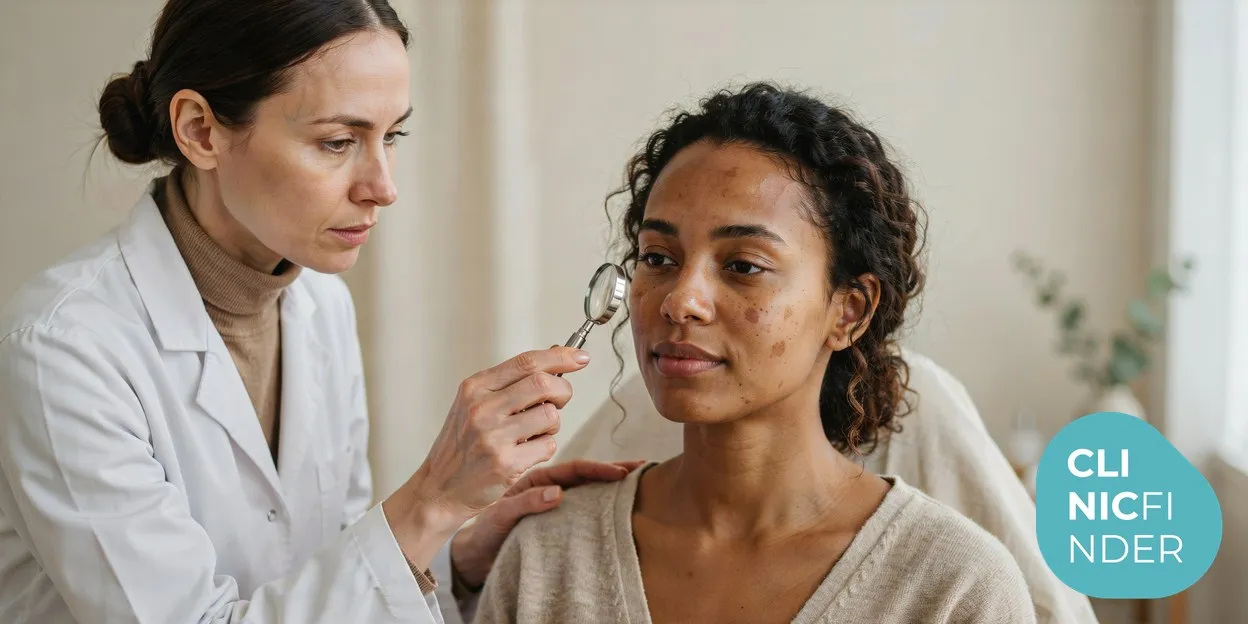
For this reason, established UK practice is to be cautious in darker skin tones (Fitzpatrick IV–VI): favouring gentler, superficial treatments first, priming the skin with melanin-inhibiting creams before certain peels, and choosing laser wavelengths regarded as safer for deeper tones. A practitioner who examines your skin, discusses your Fitzpatrick type and takes a full history is doing exactly what they should. One who reaches for the same strong laser regardless of skin tone is a warning sign.
Treatment options at a glance
There is no single best treatment — the right choice depends on the type of pigmentation, how deep it sits, and your skin tone. This table gives a broad orientation before we look at each option in detail.
| Approach | Best suited to | Downtime | Skin-tone notes |
|---|---|---|---|
| Topical skincare (SPF, vitamin C, azelaic acid, retinoids) | Mild pigmentation; foundation for every plan | None | Safe across all tones; first-line for darker skin |
| Superficial chemical peels | Sun spots, mild melasma, PIH, dull tone | Minimal (1–2 days) | Mandelic acid often preferred for darker tones |
| Medium chemical peels | More stubborn pigmentation, sun damage | 5–10 days | Used with caution and pre-treatment in darker skin |
| IPL / laser | Well-defined sun spots and freckles (lighter skin) | Varies; some redness/crusting | Higher PIH risk; device choice critical in darker skin |
| Microneedling | Melasma and PIH where lasers are risky | 1–3 days | Lower PIH risk as the epidermis is preserved |
No treatment works without sun protection. UV exposure re-triggers the very pigment you are paying to remove, so daily SPF is not an optional extra — it is the treatment.
Topical and at-home first steps
Almost every good plan begins with skincare, not a machine. Daily broad-spectrum SPF 30–50 is non-negotiable, because unprotected UV undoes any in-clinic progress. Alongside it, several well-evidenced ingredients can lighten milder pigmentation over time: vitamin C and niacinamide to brighten and even tone, azelaic acid to calm and fade, and retinoids to speed cell turnover.
Stronger agents exist, but they belong under professional care. Hydroquinone, a potent melanin inhibitor, is a prescription-only medicine in the UK and should only be used when a suitably qualified prescriber has assessed your skin and can monitor its use — it is not something to source online or use indefinitely. A good clinic will often build the topical foundation first and only add in-clinic procedures once your skin is prepared and protected.
Chemical peels for pigmentation
Chemical peels use an acid solution to remove the outer layers of skin in a controlled way, encouraging fresher, more even skin to surface. They are classified by depth, and depth determines both how much they can achieve and how much risk they carry.
- Superficial peels (alpha- and beta-hydroxy acids such as glycolic, lactic, mandelic and salicylic acid) exfoliate the outermost layer only. They have a strong safety record across skin types — including darker tones, where mandelic acid is often favoured because its larger molecule penetrates more gently — and suit mild pigmentation, PIH and dull, congested skin. Recovery is minimal: mild tightness for a day or two, sometimes with little visible peeling. These are the classic “lunchtime peels”, usually done as a course of several sessions.
- Medium peels (typically TCA, sometimes primed with a Jessner’s solution) reach deeper, into the upper dermis, and can tackle more stubborn pigmentation and sun damage. The trade-off is 5–10 days of visible peeling and a higher risk of complications — including, importantly, post-inflammatory pigmentation. In darker skin tones these are used cautiously, at lower concentrations, and often only after weeks of melanin-inhibitor pre-treatment.
- Deep peels (phenol) are powerful but are aimed mainly at severe wrinkling and sun damage rather than pigmentation, carry weeks of downtime and genuine medical risks, and are generally avoided in darker skin tones because of the high chance of dyspigmentation. They are a specialist, medically supervised procedure — not a routine pigmentation fix.
As a rough UK guide, superficial peels typically cost around £60–£150 a session (often sold as a course), and medium peels around £100–£400. Our complete guide to chemical peels covers how they work, what to expect and how to prepare in more detail.
Laser and IPL
Light-based treatments can be highly effective for the right pigmentation — but they are also where the most harm is done when skin tone is not respected.
Intense pulsed light (IPL) uses a broad spectrum of light to target well-defined brown marks such as sun spots and freckles, and works best on fair skin (Fitzpatrick I–III) where there is strong contrast between the mark and the surrounding skin. On darker skin the background melanin can absorb the light too, risking burns and fresh pigmentation. Lasers — such as Q-switched and picosecond devices — can target pigment more precisely, and certain longer-wavelength lasers are considered relatively safer for deeper tones, but device selection and operator skill are everything. Our guide to IPL versus laser explains the differences, and laser skin resurfacing covers the more intensive resurfacing options.
A crucial caveat concerns melasma. It is notoriously difficult to treat and has a real tendency to rebound or even worsen after light-based treatment, so many clinicians deliberately treat it conservatively first and approach any laser with modest expectations. If a clinic promises to “zap away” melasma in a session or two, be sceptical.
The role of microneedling
Because microneedling creates controlled micro-injuries without stripping away the surface layer, it tends to carry a lower risk of post-inflammatory pigmentation than lasers or deep peels. That makes it an option worth discussing for melasma and PIH in skin tones where lasers are risky, sometimes paired with prescribed topicals. It is not a miracle cure, and evidence is more modest than for sun spots treated with light, but it is a gentler tool in the kit. Our guide to microneedling and collagen induction explains the technique in full.
Realistic expectations and maintenance
Honesty matters here more than anywhere. Sun spots often respond dramatically and, with diligent sun protection, may not return. Melasma and PIH are different: they can be faded substantially, but melasma especially is a chronic, relapsing condition. Managing it well over years is a realistic goal; curing it forever usually is not.
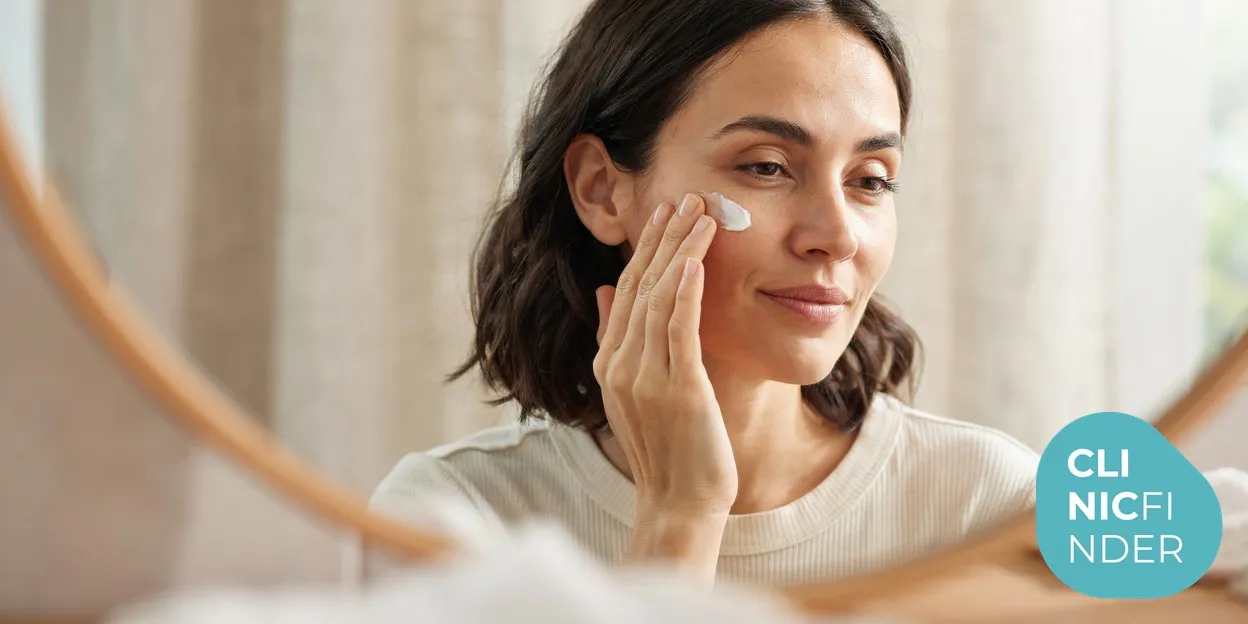
Whatever route you take, the result depends on what you do between and after sessions. Daily broad-spectrum SPF, sensible sun avoidance and a maintenance skincare routine are what protect your investment. Most concerns also need several sessions across a few months rather than a single treatment, and progress is gradual. Anyone guaranteeing a complete, permanent clearance in one visit is overselling.
Making an informed choice
Treating hyperpigmentation well is less about finding the strongest machine and more about matching the right, appropriately gentle treatment to your specific concern and skin tone — and protecting the result afterwards. The clinics that get the best outcomes are the ones that take a careful history, assess your Fitzpatrick type, patch-test before light-based treatment and set honest expectations about maintenance and relapse.
Before you book, look for a practitioner who is properly qualified and experienced in treating your skin tone, ask how they will manage the risk of post-inflammatory pigmentation, and be wary of anyone offering aggressive lasers or deep peels without a thorough assessment. Use Clinic Finder to compare accredited clinics near you and check your practitioner’s credentials — and see our guide to choosing an aesthetic clinic for exactly what to ask before you commit.
